GenParenting

Parenting resources for all who love and care for children

  • Parenting
    • Infants | Preschoolers
    • K-8
    • Teens
    • Special Needs
  • Family Health
    • Infants | Preschoolers Health
    • K-8 Family Health
    • Teens Family Health
    • Special Needs Family Health
  • Resources
    • Printables | eBooks
    • Books | Products
    • Websites | Orgs
    • Bilingual
  • Our Authors
    • Jo Baldwin
    • Mary Ann Burke
    • Phil Caposey
    • Ruth Cook
    • Melissa Donahoe
    • Danielle Gentry
    • Laura Greenstein
    • Joyce Iwasaki
    • Yvette King-Berg
    • Jaime Koo
    • Kevin Myers
    • Rosemarie Perez
    • Karen Salzer
    • Alison Whiteley
    • Denise Williams
    • Rafael Zavala
  • About
    • Work with Us
    • Press
    • Privacy Policy
    • Disclaimer and Terms of Use

Aug 15 2018

Talking About Death and Difficult Subjects Reading Activity

Talking About Death and Difficult Subjects Reading Activity 

Children are often curious about understanding the death of a pet or family member. You can read your child an age appropriate book or the story below about the death of a father when a child is a preschooler or early elementary student. When children lose a young parent to death, they can become very fearful that they may lose other significant family members at a young age. It is critical that we reassure our children when they hear about a friend or family member.

The story below is written by Michele McDevitt, a GenParenting guest blogger, who sadly has significant experiences working with grief and young family members. After reading the story, you can answer the comprehension questions and submit a comment to GenParenting.com. [Read more…]
Mary Ann Burke, Digital Education Expert

Mary Ann Burke, Ed.D., Digital Education Expert, is a substitute distance learning teacher for Oak Grove School District in San Jose, California and the author of STUDENT-ENGAGED ASSESSMENT: Strategies to Empower All Learners (Rowman & Littlefield: 2020). Dr. Burke creates digital language arts and substitute teaching K – 12 activities for teachers and parents. She is the Cofounder of the Genparenting.com blog. Burke is the former Director II of Categorical & Special Projects for the Santa Clara County Office of Education that supports 31 school districts serving 272,321 students in Santa Clara County. She is also a previous Director – State & Federal Compliance for Oakland Unified School District, the former Director – Grantwriter for the Compton Unified School District, and was the initial VISTA Director for the Community Partnership Coalition in southern California. Much of her work focuses on creating innovative digital trainings and partnership programs for teachers and families to support students’ learning. These programs were featured as a best practice at a National Title I Conference, California’s Title I Conferences, AERA Conferences, an ASCD Conference, the NASSP Conference, and statewide educator conferences.

Written by Mary Ann Burke, Digital Education Expert · Categorized: Early Childhood Parenting, Elementary School Parenting, Social-Emotional Health · Tagged: Early Parenting, Educating children, family values, Parent Decisions, Parenting, parents as teachers, teachable moments

Aug 14 2018

Talking About Death and Difficult Subjects

Talking About Death and Difficult Subjects 

Preschoolers and early elementary children are very interested in talking about death and difficult subjects. Typically, children will ask parents a variation of one of these questions:

  1. Why did the insect die?
  2. Did my cat go to cat heaven? Can I see her?
  3. I know great grandpa was very old and sick? Why did he die? Where did he go? Will I see him again?
  4. Will you die soon?

A Parent’s Response

When asked these questions, parents are typically overwhelmed about how to simply answer the question. When their great grandparents died, we told our preschoolers and early elementary grandkids that their great grandparents were very sick for a long time and that they died from old age and being very sick. We assured them that we would not die tomorrow and are taking very good care of ourselves. We also do not project fear and were very loving about the fun times the grandkids shared with the older relative. [Read more…]

Mary Ann Burke, Digital Education Expert

Mary Ann Burke, Ed.D., Digital Education Expert, is a substitute distance learning teacher for Oak Grove School District in San Jose, California and the author of STUDENT-ENGAGED ASSESSMENT: Strategies to Empower All Learners (Rowman & Littlefield: 2020). Dr. Burke creates digital language arts and substitute teaching K – 12 activities for teachers and parents. She is the Cofounder of the Genparenting.com blog. Burke is the former Director II of Categorical & Special Projects for the Santa Clara County Office of Education that supports 31 school districts serving 272,321 students in Santa Clara County. She is also a previous Director – State & Federal Compliance for Oakland Unified School District, the former Director – Grantwriter for the Compton Unified School District, and was the initial VISTA Director for the Community Partnership Coalition in southern California. Much of her work focuses on creating innovative digital trainings and partnership programs for teachers and families to support students’ learning. These programs were featured as a best practice at a National Title I Conference, California’s Title I Conferences, AERA Conferences, an ASCD Conference, the NASSP Conference, and statewide educator conferences.

Written by Mary Ann Burke, Digital Education Expert · Categorized: Early Childhood Parenting, Elementary School Parenting, Social-Emotional Health · Tagged: #Resolver problemas, Educating children, family values, Parenting, parents as teachers, Problem-Solving

Jun 19 2018

Your Child Hurts Himself and Doesn’t Want to Cry

Your Child Hurts Himself and Doesn’t Want to Cry!

One of my friends brought her child over to my home to play with my grandson. While running around the backyard, my friend’s son, Nathan, stumbled and fell hard on his knee. The knee was severely bruised and bloody. Shockingly, Nathan withheld any emotion although he was in extreme pain. My friend and I were alarmed that he was too self-conscious and afraid to express his true emotions. When approaching Nathan about his injury, my friend responded to his distress by:


  • Encouraging him to express how he felt
  • Telling him it was OK to cry
  • Reassuring and cuddling her son
  • Having her son help when washing and applying medicine on the knee

[Read more…]

Joyce Iwasaki, Early Parenting

Joyce Iwasaki has over thirty years of educational experience working with diverse students in grades from preschool through high school. Joyce’s extensive background includes teaching elementary school, serving on early childhood advisory boards, and advocating for educational initiatives as a legislative aide. During her tenure as a legislative aide, she helped create legislation that allowed incarcerated mothers to keep their newborn babies with them while in prison. Additional legislation was enacted to allow incarcerated pregnant mothers to remain unshackled during labor and delivery. Ms. Iwasaki established and served as the president of an educational scholarship foundation for fifteen years. Her foundation awarded college scholarships to emerging student leaders who provided service to their schools and communities. Joyce is active in performing arts and cultural organizations. She also provides ongoing support to her daughter and family by raising her grandson in her home.

Written by Joyce Iwasaki, Early Parenting · Categorized: Early Childhood Parenting, Infants | Preschoolers Health, Social-Emotional Health · Tagged: cry, Early Parenting, Family health, Parenting, teachable moments

Mar 13 2018

Addressing Disengagement with School

Addressing Disengagement with School

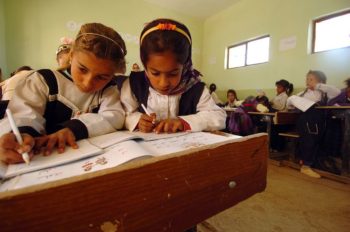
It is difficult when we see our middle and high school children disengaging with school. They could be struggling academically, socially with their friends, or in their relationships with their teachers. Possibly, something going on at home may be weighing on their mind and causing them to lose focus. This disengagement sometimes reveals itself as problematic behavior. When the behavior is addressed in a punitive way without looking deeper for the reason behind it, behavior will get worse.
[Read more…]

Rosemarie Perez, Parenting

Rosemarie Pérez has worked with English learners and their families in public education for more than twenty years. She has served as a bilingual teacher, professional developer, and district administrator. Administrative roles included serving as the Director of English Learners for an elementary school district and as a Coordinator of Reading and Language for the San Mateo County Office of Education. Rosemarie continues to work with families as she leads the Santa Clara County Office of Education’s Parent Engagement Initiative during the past three years. Ms. Pérez provides expert guidance to teachers, school site staff, and school administrators in creating culturally sensitive parent training modules and academic curricular units. She facilitates parent education and Common Core Standards workshops. Engaged parents are further trained to become parent leaders and advocates. Rosemarie is the mother of five adult children and three grandchildren.

Written by Rosemarie Perez, Parenting · Categorized: Parenting Adolescents, Parenting and Divorce, Secondary School Parenting, Social-Emotional Health, Teens Family Health · Tagged: #Disengagement with school, #parenting teens, #Supporting Adolescents

Jan 30 2018

How Parents Can Support Their Children’s School Successes

How Parents Can Support Their Children’s School Successes

Providing students and staff with challenging opportunities can bolster their confidence. This can improve their desire to excel when they experience success.

Writing a Novel

Our middle school’s teachers have dedicated themselves to promoting literacy in all subject areas this year because many of our students are not reading and writing at grade level. Our 7th grade teachers decided to have their students participate in the NaNoWriMo National Novel Writing Month last November.

Each 7th grade student wrote an 8,000-word novel about a personal experience, hope, or dream by completing the following steps:

  1. Research a topic.
  2. Outline the novel’s fictional or non-fictional contents.
  3. Write the novel in 30 days.
  4. Peer review and self-edit through feedback.
  5. Use the Hemingway software application for writing feedback.
  6. Professionally assemble the novel.
  7. Learn how to sell a self-published book at a local book fair.

Many students were surprised that they could complete the assignment. They also began pursuing more writing challenges that allowed them to be creative. [Read more…]

Yvette
Yvette King-Berg, College Readiness

Yvette King-Berg, is the Executive Director of Youth Policy Institute’s Charter Schools. She was the former California Charter Schools Association Vice-President of School Development and Outreach-Southern California. Ms. King-Berg has over thirty years of experience working with teachers, students, parents, and organizations in a variety of positions including Director, Assistant Director, Curriculum Advisor, Bilingual, and Title 1 Coordinators, classroom teacher (K-12) in Pasadena and LAUSD. She has been married for twenty-three years, and is the proud mother of her son, EJ, who attends UC Berkeley.

Written by Yvette King-Berg, College Readiness · Categorized: Academic Support and Play Activities, Parenting Adolescents, Social-Emotional Health · Tagged: #problem solving #parenting teens, academic success, college and career planning, college readiness, Educating children, parents as teachers, teachable moments

  • « Previous Page
  • 1
  • …
  • 8
  • 9
  • 10
  • 11
  • 12
  • …
  • 16
  • Next Page »

Search the site

Translate

Sign up for updates

Follow us

Copyright © 2026 — GenParenting • All rights reserved