 Kids Learn to Express Themselves Through Writing
During the last weeks of school, our primary grade students learned about various types of soil and mud when planting flowers, studying the uses of mud, and learning how to use computers for research in 10-page reports.
What the Students Researched
- Learning how to write an introduction to the report
- Writing about descriptions and uses for clay soil, loamy soil, and sandy soil
- Planting a flower and writing about the type of soil used for planting
- Listing the steps completed to make mud and plant a flower
- Learning how to calculate how much water is needed for making mud in different quantities
- Completing a soil and mud research checklist for added research in books and on the computer
- Writing a book report on mud and soil uses
- Writing a computer report on mud and soil uses
- Completing a reflection questionnaire of what was learned
- Creating a glossary of new vocabulary words used in the report
How Students Learned to Use Their Own Words
Throughout this project, students were encouraged to summarize what they read in their own words. Most students were successful in completing this task without teacher assistance:
- When listing the steps to make mud and planting a flower
- Completing a research checklist
- Writing a report introduction
- Writing a reflection of what they learned
- Completing a glossary of new vocabulary words
When writing about various types of soil, most students preferred to copy the technical information. Many students did not copy every word in the informational text. Book reports were completed by students on a topic they wanted to learn more about. Various nonfiction reading level books were available for student use.
The computer report was the most challenging for students to complete. Most students had never summarized online technical resources and articles. Many started the assignment by copying text. As the students became more familiar with the online content, many were able to apply what they read to everyday life.
How to Support Challenged Students
When some students were very frustrated with an assignment, we used very basic reading samples and had students copy a couple of sentences. Next, we interviewed them and asked them how they might use this knowledge in their daily lives. We also created sentence frames. Sentence frames are very simple sentences that students can complete in their own words. For example, a sentence frame might state that clay soil is comprised of very fine mineral particles and is sticky. Then students can complete a sentence frame that says clay soil will ___________. We then ask students if they think clay soil will make a puddle or will soak into the ground. Students typically responded that clay soil makes a puddle because they experienced that result when making clay mud. Once students were able to talk about a challenging topic in their own words, they slowly became more confident in writing simple sentences about what they learned. We also had capable students tutor and assist their more challenged peers. This one-on-one tutoring support was incredibly helpful as students could share more personalized help with their peers.
Student Led Evaluations
My next blog post will describe how we constructed a Mud Report Student Evaluation for each student that highlighted their competencies in five different areas. Nearly 53% of the students in our project received a Level 4 Emerging Expert Evaluation overall rating because they were able to complete work independently and wrote their report using their own words on several assigned pages.


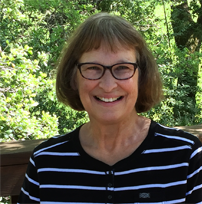
Mary Ann Burke, Ed.D., Digital Education Expert, is a substitute distance learning teacher for Oak Grove School District in San Jose, California and the author of STUDENT-ENGAGED ASSESSMENT: Strategies to Empower All Learners (Rowman & Littlefield: 2020). Dr. Burke creates digital language arts and substitute teaching K – 12 activities for teachers and parents. She is the Cofounder of the Genparenting.com blog. Burke is the former Director II of Categorical & Special Projects for the Santa Clara County Office of Education that supports 31 school districts serving 272,321 students in Santa Clara County. She is also a previous Director – State & Federal Compliance for Oakland Unified School District, the former Director – Grantwriter for the Compton Unified School District, and was the initial VISTA Director for the Community Partnership Coalition in southern California. Much of her work focuses on creating innovative digital trainings and partnership programs for teachers and families to support students’ learning. These programs were featured as a best practice at a National Title I Conference, California’s Title I Conferences, AERA Conferences, an ASCD Conference, the NASSP Conference, and statewide educator conferences.